
Arcade MateRound 02
The Octopus Knight
One knight. Eight squares. Eighteen moves. The world champion never got out.
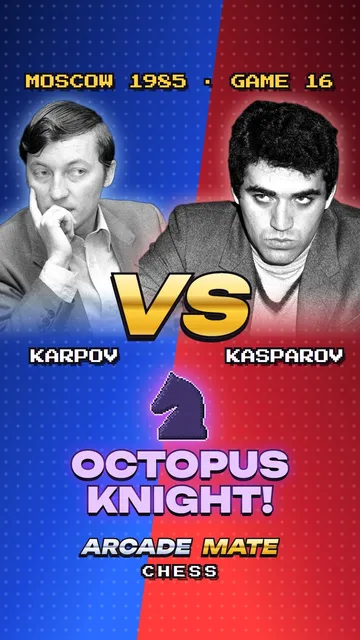
- White
- Anatoly KarpovWorld champion since 1975. Age 34.
- Black
- Garry KasparovChallenger, from Baku. Age 22.
- Event
- World Championship match, game 16
- Place
- Tchaikovsky Concert Hall, Moscow
- Date
- 15 October 1985
- Opening
- Sicilian Defense, Taimanov Variation, Kasparov Gambit (B44)
- Result
- 0-1White resigned, facing mate in 2, 40 moves
- Video
- 2:31Published 6 November 2026
The story
Moscow, October 1985. The World Championship match is tied at 7½ to 7½. Anatoly Karpov has held the title for ten years. Garry Kasparov is 22.
With Black, Kasparov repeats a pawn sacrifice from game 12: 8...d5, the Kasparov Gambit. A roar goes up in the grandmasters' analysis room: several of them had bet he would not dare to play it again. Karpov takes the pawn and keeps it.
The pawn buys a knight. On move 16 it lands on d3, deep in White's position, protected by a bishop. From there it controls eight squares and freezes the white queen and both rooks. Raymond Keene called it "a monstrous centralised octopus", and the name stuck.
For 18 moves the knight does not move, and Karpov cannot. His knights go back to b1 and to the edge of the board. Kasparov takes space on both sides until White has almost no useful moves left.
On move 34, in desperate time trouble, Karpov finally takes the octopus with his queen. The second knight jumps in at once: 34...Nf2+ forks the king, the queen and a rook. Six moves later, facing mate in two, Karpov resigns, and the audience jumps to its feet.
It was Kasparov's first lead in the match. He never gave it back: 25 days later he was the youngest world champion in history.
Key moments
Frames from the video, one for each turning point.
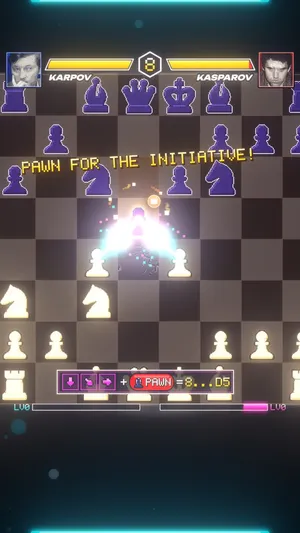
8...d5!?
The Kasparov Gambit
A pawn for the initiative. Kasparov had played it once before, in game 12.
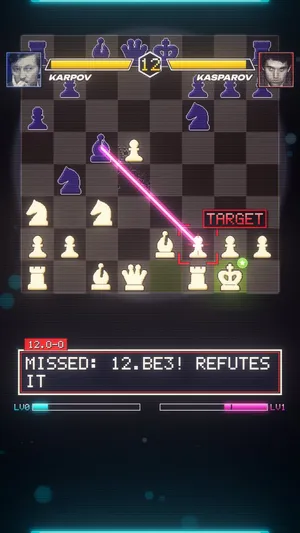
12.O-O
The missed refutation
Karpov castles. 12.Be3! would have won the knight back and refuted the gambit.
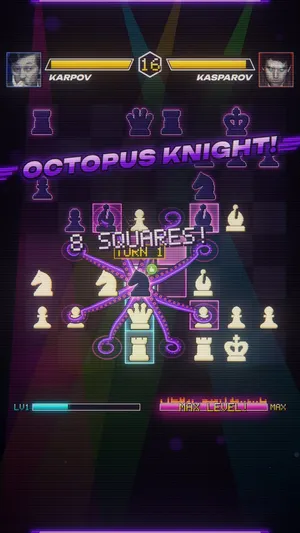
16...Nd3!
The octopus lands
The knight reaches d3 and grips eight squares. It stays there for 18 moves.
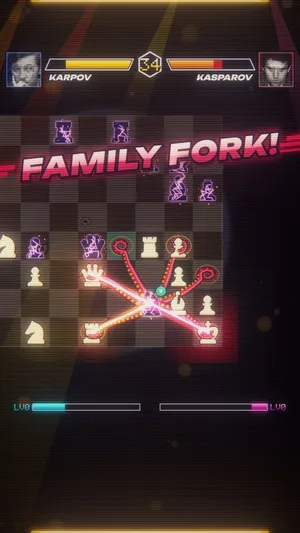
34...Nf2+!
The octopus returns
Karpov has just taken the knight on d3. The other one forks king, queen and rook.
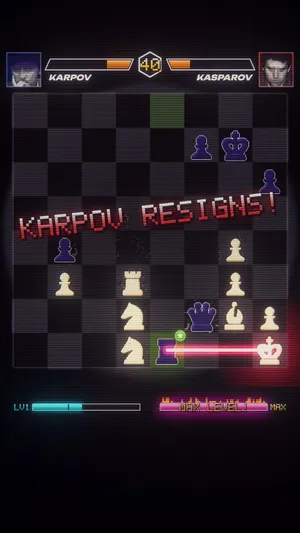
40...Re1+
Karpov resigns
Mate in two follows: 41.Nf1 Rxf1+ 42.Bxf1 Qxf1#.
Questions
Who won Karpov vs Kasparov, 1985?
Garry Kasparov won with the black pieces. White resigned, facing mate in 2, on move 40.
Why is it called the Octopus Knight game?
Because of Kasparov's knight on d3. It arrived with 16...Nd3, controlled eight squares deep in White's position, and stayed there for 18 moves. Raymond Keene called it "a monstrous centralised octopus" in The Spectator on 26 October 1985.
What was the key move of the Octopus Knight game?
16...Nd3, the knight landing on its outpost. When Karpov finally took it with 34.Qxd3, the other black knight jumped in with 34...Nf2+, forking king, queen and rook, and six moves later Karpov resigned.
Was the Kasparov Gambit sound?
No, and nobody at the board saw it. After 11...Bc5, 12.Be3! Bxe3 13.Qa4+ wins back the knight on b4 and refutes the idea. Karpov castled instead, played 12.Be3 himself a year later against van der Wiel, and the gambit all but disappeared. Also, Karpov was not checkmated: he resigned facing mate in two.
How long was Karpov vs Kasparov, 1985, and what opening was played?
40 moves. The opening was the Sicilian Defense, Taimanov Variation, Kasparov Gambit (B44). Played: World Championship match, game 16, Tchaikovsky Concert Hall, Moscow, 15 October 1985.
Command list
- 1.e4c5
- 2.Nf3e6
- 3.d4cxd4
- 4.Nxd4Nc6
- 5.Nb5d6
- 6.c4Nf6
- 7.N1c3a6
- 8.Na3d5!?
- 9.cxd5exd5
- 10.exd5Nb4
- 11.Be2Bc5
- 12.O-OO-O
- 13.Bf3Bf5
- 14.Bg5Re8
- 15.Qd2b5
- 16.Rad1Nd3!
- 17.Nab1?h6
- 18.Bh4b4
- 19.Na4Bd6
- 20.Bg3Rc8
- 21.b3g5!!
- 22.Bxd6Qxd6
- 23.g3Nd7!!
- 24.Bg2Qf6
- 25.a3a5
- 26.axb4axb4
- 27.Qa2Bg6
- 28.d6g4
- 29.Qd2Kg7
- 30.f3?Qxd6
- 31.fxg4Qd4+
- 32.Kh1Nf6
- 33.Rf4Ne4
- 34.Qxd3Nf2+!
- 35.Rxf2Bxd3
- 36.Rfd2Qe3
- 37.Rxd3Rc1!
- 38.Nb2Qf2!
- 39.Nd2Rxd1+
- 40.Nxd1Re1+
The PGN file
[Event "Karpov - Kasparov World Championship Match"]
[Site "Moscow URS"]
[Date "1985.10.15"]
[EventDate "?"]
[Round "16"]
[Result "0-1"]
[White "Anatoly Karpov"]
[Black "Garry Kasparov"]
[ECO "B44"]
[WhiteElo "?"]
[BlackElo "?"]
[PlyCount "80"]
[Opening "Sicilian Defense: Paulsen Variation, Gary Gambit (Kasparov Gambit 8...d5)"]
[Source "chessgames.com gid=1067175 (The Brisbane Bombshell, Game of the Day Nov-11-2016), downloaded 2026-10-12"]

1.e4 c5 2.Nf3 e6 3.d4 cxd4 4.Nxd4 Nc6 5.Nb5 d6 6.c4 Nf6 7.N1c3
a6 8.Na3 d5 9.cxd5 exd5 10.exd5 Nb4 11.Be2 Bc5 12.O-O O-O
13.Bf3 Bf5 14.Bg5 Re8 15.Qd2 b5 16.Rad1 Nd3 17.Nab1 h6 18.Bh4
b4 19.Na4 Bd6 20.Bg3 Rc8 21.b3 g5 22.Bxd6 Qxd6 23.g3 Nd7
24.Bg2 Qf6 25.a3 a5 26.axb4 axb4 27.Qa2 Bg6 28.d6 g4 29.Qd2
Kg7 30.f3 Qxd6 31.fxg4 Qd4+ 32.Kh1 Nf6 33.Rf4 Ne4 34.Qxd3 Nf2+
35.Rxf2 Bxd3 36.Rfd2 Qe3 37.Rxd3 Rc1 38.Nb2 Qf2 39.Nd2 Rxd1+
40.Nxd1 Re1+ 0-1
What we checked
Every caption in the video was checked against the sources. Some well-known stories did not survive.
The Kasparov Gambit was sound.
It was not, and nobody at the board saw it. After 11...Bc5, the move 12.Be3! Bxe3 13.Qa4+ wins the knight on b4 back and refutes the idea. Karpov castled instead. He played 12.Be3 himself a year later against van der Wiel, and the gambit all but disappeared.
Kasparov named the octopus.
The word comes from the reports of the time. Raymond Keene wrote of "a monstrous centralised octopus" in The Spectator on 26 October 1985. Kasparov's own wording could not be found, so the video does not quote him.
18 moves on d3.
Counted on the scoresheet: the knight arrives with 16...Nd3 and is taken by 34.Qxd3.
Karpov was checkmated.
He resigned after 40...Re1+, a pawn up by count. Mate in two was forced: 41.Nf1 Rxf1+ 42.Bxf1 Qxf1#, or 41.Bf1 Rxf1+ 42.Nxf1 Qxf1#. The video plays that mate out after the resignation.
Credits
- Photos: Nationaal Archief / Anefo (CC0). Karpov: Sjakkelien Vollebregt, Amsterdam, 22 July 1985. Kasparov: Rob Bogaerts, 17 December 1985.
- Music and voices: original.
Next fight
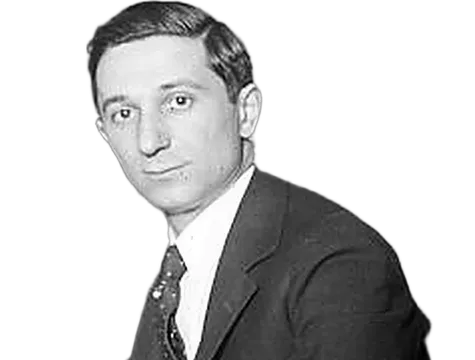
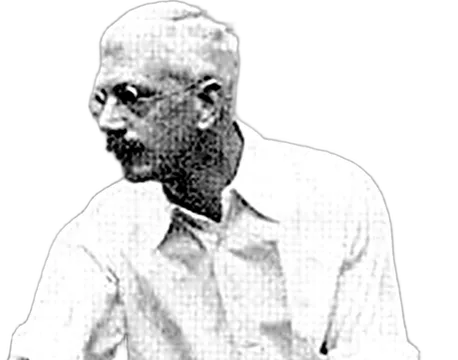 Round 071-0 · CheckmateEd. Lasker vs Thomas · 1912The King ElevatorOne queen for one pawn, then eight checks in a row. The king walks from g8 all the way down to g1.Press start

 Quick 051-0 · CheckmateMorphy vs The Duke and the Count · 1858The Most Famous Checkmate in Chess HistoryA rook, then the queen. Morphy gives both away, and the last rook slides to d8.Press start
- Player 2Your gameSend the PGN of your best game. It might be the next fight, with your name on it.Insert coin